Introduction to IoT Using Raspberry Pi Training Course
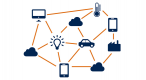
The Internet of Things (IoT) represents a network infrastructure that wirelessly connects physical objects with software applications, enabling them to communicate and exchange data through network communications, cloud computing, and data capture capabilities.
In this instructor-led live training, participants will master IoT fundamentals by guiding them through the creation of an IoT sensor system utilizing the Raspberry Pi.
Upon completion of this training, participants will be able to:
- Comprehend IoT principles, including its components and communication methods
- Learn the specific steps to configure the Raspberry Pi for IoT applications
- Build and deploy their own IoT Sensor System
Audience
- Hobbyists
- Hardware/software engineers and technicians
- Technical professionals across all industries
- Beginning developers
Format of the course
- Part lecture, part discussion, exercises and heavy hands-on practice
Note
- The Raspberry Pi supports various operating systems and programming languages. This course utilizes the Linux-based Raspbian operating system and Python as the programming language. To request a specific setup, please contact us to arrange.
- Participants are responsible for purchasing the Raspberry Pi hardware and components.
Course Outline
Introduction to IoT
- Understanding IoT Fundamentals
- Examples of IoT Devices and Platforms
Overview of IoT Components
- Analog Sensors
- Digital Sensors
Overview of IoT Communication Techniques
- Wi-Fi
- Bluetooth
- RFID
- Mobile Internet
Raspberry Pi Refresher
- Using GPIO Pins
- Communication Protocols
Setting Up the Raspberry Pi for IoT
- Connecting the Raspberry Pi to LAN via Ethernet
- Using SSH
- Installing a Server
- Overview of Google Cloud Messaging (GCM) Service
Creating an IoT Motion Sensor System with Raspberry Pi
- Overview of PIR Motion Sensor
- Interfacing the Hardware: Raspberry Pi, PIR Motion Sensor
- Creating a Database for Sensor Data Logging
- Recording the Sensor Data in the Database
- Triggering and Sending Push Notifications via GCM
Troubleshooting
Conclusion and Summary
Requirements
- A basic understanding of embedded Linux systems
- Experience with setting up and using the Raspberry Pi
- Experience with programming the Raspberry Pi using Python
Need help picking the right course?
Introduction to IoT Using Raspberry Pi Training Course - Enquiry
Testimonials (4)
The ability of the trainer to align the course with the requirements of the organization other than just providing the course for the sake of delivering it.
Masilonyane - Revenue Services Lesotho
Course - Big Data Business Intelligence for Govt. Agencies
The oral skills and human side of the trainer (Augustin).
Jeremy Chicon - TE Connectivity
Course - NB-IoT for Developers
Practical examples and wider context given.
James - Mitsubishi Electric R&D Centre Europe BV (MERCE-UK)
Course - IoT Programming with Python
The trainer was very interactive and steadily paced.
Carolyn Yaacoby - Yeshiva University
Course - Raspberry Pi for Beginners
Upcoming Courses
Related Courses
5G and IoT
14 HoursThis training aims to elucidate the nature of 5G networks and their profound influence on smart technologies. We will explore both the benefits and drawbacks of the synergy between 5G and IoT, while highlighting the developmental trajectory of a network designed from its inception for the smart world.
6G and IoT
14 Hours6G represents the next-generation wireless communication standard poised to revolutionize IoT ecosystems through ultra-fast connectivity, advanced sensing, and integrated AI capabilities.
This instructor-led, live training (available online or onsite) is designed for advanced-level participants eager to understand and leverage the emerging intersection of 6G technologies and IoT applications.
Upon completing this course, learners will be equipped to:
- Explain the core technical concepts behind 6G.
- Assess how 6G will reshape IoT device communication and architecture.
- Evaluate 6G-enabled IoT use cases across industries.
- Prepare strategies for integrating 6G capabilities into existing IoT solutions.
Format of the Course
- Concept-focused lectures combined with expert discussion.
- Applied exercises designed to reinforce key engineering principles.
- Case-based exploration and scenario analysis in a guided environment.
Course Customization Options
- For tailored versions of this training aligned with your organizational technology roadmap, please contact us to arrange.
Big Data Business Intelligence for Govt. Agencies
35 HoursTechnological advancements and the exponential growth of information are reshaping business operations across various sectors, including the government sector. The volume of government-generated data and digital archiving is accelerating, driven by the proliferation of mobile devices and applications, smart sensors and IoT devices, cloud computing solutions, and citizen-facing portals. As digital information expands and grows more complex, the management, processing, storage, security, and disposition of this data become increasingly intricate. Emerging tools for capture, search, discovery, and analysis are empowering organizations to extract valuable insights from unstructured data. The government sector is reaching a critical juncture, recognizing information as a strategic asset. Governments must protect, leverage, and analyze both structured and unstructured information to better serve citizens and fulfill mission objectives. As government leaders work to transform their organizations into data-driven entities capable of successfully achieving their missions, they are establishing the framework to correlate dependencies across events, people, processes, and information.
High-impact government solutions are being developed through the integration of several disruptive technologies:
- Mobile devices and applications
- Cloud services
- Social business technologies and networking
- Big Data and analytics
Big Data represents a key intelligent industry solution that enables governments to make informed decisions by acting on patterns identified through the analysis of large volumes of data—whether related or unrelated, structured or unstructured.
However, achieving these objectives requires more than just accumulating massive amounts of data. "Making sense of these volumes of Big Data requires cutting-edge tools and technologies that can analyze and extract useful knowledge from vast and diverse streams of information," noted Tom Kalil and Fen Zhao from the White House Office of Science and Technology Policy in a post on the OSTP Blog.
The White House took significant steps to assist agencies in identifying these technologies by launching the National Big Data Research and Development Initiative in 2012. This initiative allocated over $200 million to capitalize on the explosion of Big Data and the necessary tools for its analysis.
The challenges posed by Big Data are nearly as formidable as its potential is promising. Efficient data storage remains a primary challenge. With budgets consistently tight, agencies must minimize the per-megabyte cost of storage while ensuring data remains easily accessible, allowing users to retrieve it quickly and efficiently. The complexity increases further when backing up massive quantities of data.
Effective data analysis presents another major challenge. Many agencies utilize commercial tools that allow them to sift through vast amounts of data, identifying trends that enhance operational efficiency. (A recent study by MeriTalk revealed that federal IT executives believe Big Data could help agencies save over $500 billion while also meeting mission objectives.)
Custom-developed Big Data tools are also enabling agencies to address their analytical needs. For instance, the Oak Ridge National Laboratory’s Computational Data Analytics Group has made its Piranha data analytics system available to other agencies. This system has assisted medical researchers in identifying links that can alert doctors to aortic aneurysms before they occur. It is also employed for routine tasks, such as screening resumes to match job candidates with hiring managers.
Insurtech: A Practical Introduction for Managers
14 HoursInsurtech, also known as Digital Insurance, represents the intersection of insurance services and emerging technologies. In this dynamic field, digital insurers leverage technological innovations to reshape their business and operational models, aiming to lower costs, elevate customer experiences, and boost operational agility.
This instructor-led training equips participants with the knowledge of the technologies, methodologies, and mindset required to drive digital transformation within their organizations and across the broader industry. The course is designed for managers seeking a comprehensive overview, aiming to cut through industry hype and jargon, and to initiate the development of a robust Insurtech strategy.
Upon completion of this training, participants will be capable of:
- Discussing Insurtech and its various components with intelligence and systematic clarity
- Identifying and clarifying the function of each key technology within the Insurtech ecosystem
- Drafting a general strategy for implementing Insurtech solutions within their organization
Target Audience
- Insurance companies and professionals
- Technologists working within the insurance sector
- Stakeholders in the insurance industry
- Consultants and business analysts
Course Format
- A blend of lectures, discussions, exercises, and group case study activities
Digital Transformation with IoT and Edge Computing
14 HoursThis instructor-led, live training in the UAE (online or onsite) is designed for intermediate-level IT professionals and business managers who wish to explore the potential of IoT and edge computing to enhance efficiency, enable real-time processing, and drive innovation across various sectors.
By the conclusion of this training, participants will be able to:
- Understand the core principles of IoT and edge computing and their role in digital transformation.
- Identify relevant use cases for IoT and edge computing in manufacturing, logistics, and energy.
- Differentiate between edge and cloud computing architectures and deployment scenarios.
- Implement edge computing solutions for predictive maintenance and real-time decision-making.
Edge AI for IoT Applications
14 HoursThis instructor-led, live training in the UAE (online or onsite) is aimed at intermediate-level developers, system architects, and industry professionals who wish to leverage Edge AI for enhancing IoT applications with intelligent data processing and analytics capabilities.
By the end of this training, participants will be able to:
- Understand the fundamentals of Edge AI and its application in IoT.
- Set up and configure Edge AI environments for IoT devices.
- Develop and deploy AI models on edge devices for IoT applications.
- Implement real-time data processing and decision-making in IoT systems.
- Integrate Edge AI with various IoT protocols and platforms.
- Address ethical considerations and best practices in Edge AI for IoT.
Edge Computing
7 HoursThis instructor-led, live training session in the UAE (available online or onsite) is intended for product managers and developers who aim to decentralize data management to improve performance by leveraging smart devices located on the source network.
By the conclusion of this training, participants will be able to:
- Grasp the basic concepts and advantages of Edge Computing.
- Identify specific use cases and examples suitable for Edge Computing applications.
- Design and build Edge Computing solutions to enable faster data processing and reduce operational costs.
Embedded Systems and IoT Fundamentals
21 HoursEmbedded systems are specialized computing solutions crafted to execute specific tasks within broader ecosystems. IoT (Internet of Things) refers to a network of connected physical devices equipped with sensors and software, enabling them to communicate and share data via the internet.
This instructor-led live training, available both online and onsite, is designed for technical beginners looking to grasp and apply embedded systems and IoT principles using C programming and microcontroller architectures.
Upon completion, participants will be equipped to:
- Comprehend the architecture and components of embedded systems.
- Develop and compile C code to facilitate interaction with embedded hardware.
- Operate microcontroller peripherals, including timers and ADCs.
- Grasp the role of embedded systems within IoT architectures.
Course Format
- Engaging lectures and interactive discussions.
- Numerous exercises and practical practice sessions.
- Hands-on implementation within a live lab environment.
Customization Options
- To arrange a customized training session for this course, please contact us.
Federated Learning in IoT and Edge Computing
14 HoursThis instructor-led, live training in the UAE (online or onsite) targets intermediate-level professionals aiming to apply Federated Learning to optimize IoT and edge computing solutions.
By the end of this training, participants will be able to:
- Understand the principles and benefits of Federated Learning in IoT and edge computing.
- Implement Federated Learning models on IoT devices for decentralized AI processing.
- Reduce latency and improve real-time decision-making in edge computing environments.
- Address challenges related to data privacy and network constraints in IoT systems.
Securing Cloud and IoT Applications
21 HoursThis instructor-led, live training in the UAE (onsite or remote) is aimed at engineers who wish to set up, deploy and manage a secure IoT application.
By the end of this training, participants will be able to:
- Develop and deploy applications to manage IoT devices securely.
- Securely integrate IoT devices to the Cloud.
- Integrate an IoT application with existing infrastructure.
Getting Started with IoT (Internet of Things) and Augmented Reality
14 HoursThe Internet of Things (IoT) represents a rapidly evolving technological landscape that wirelessly links physical devices with software applications to enable remote monitoring and control. Meanwhile, Augmented Reality (AR) enhances user engagement by overlaying virtual, computer-generated visuals onto the real-world environment. This capability allows enterprises to deliver real-time, contextual information directly into the physical workspace. Both technologies are witnessing accelerated adoption rates across diverse industries.
Through this instructor-led live training, attendees will master the core principles of IoT and AR and learn how to integrate these technologies into their organizational operations and strategic frameworks.
Upon completing this training, participants will be equipped to:
- Grasp the foundational concepts of IoT and AR
- Comprehend the operational mechanics of IoT and AR technologies
- Identify strategies for applying IoT and AR to enhance business operations
- Execute well-informed strategic decisions regarding IoT and AR implementation
Target Audience
- Managers
- Entrepreneurs
Course Format
- A blend of lectures, interactive discussions, practical exercises, and extensive hands-on practice
Important Note
- For personalized training arrangements, please reach out to us.
IoT Programming with Python
14 HoursThe Internet of Things (IoT) refers to a network infrastructure that wirelessly links physical devices with software applications, enabling seamless communication and data exchange through network connectivity, cloud computing, and data acquisition. Python is highly recommended for IoT development due to its readable syntax and robust community support.
In this instructor-led live training, participants will acquire the skills necessary to develop IoT solutions using Python.
Upon completion of this training, participants will be able to:
- Comprehend the core principles of IoT architecture
- Master the fundamentals of using Raspberry Pi
- Install and configure Python on a Raspberry Pi device
- Recognize the advantages of utilizing Python for IoT system programming
- Construct, test, deploy, and troubleshoot IoT systems employing Python and Raspberry Pi
Target Audience
- Software Developers
- Engineers
Course Format
- A blend of lectures, discussions, exercises, and extensive hands-on practice
Note
- For customized training arrangements for this course, please contact us to make necessary arrangements.
NB-IoT for Developers
7 HoursIn this instructor-led, live training in the UAE, participants will explore the various aspects of NB-IoT (also known as LTE Cat NB1) while developing and deploying a sample NB-IoT-based application.
By the end of this training, participants will be able to:
- Identify the different components of NB-IoT and understand how they integrate to form an ecosystem.
- Understand and explain the security features built into NB-IoT devices.
- Develop a simple application to track NB-IoT devices.
Raspberry Pi for Beginners
14 HoursThe Raspberry Pi is a compact, single-board computer.
In this instructor-led live training, attendees will discover how to configure and program the Raspberry Pi to function as an interactive and robust embedded system.
Upon completion of this training, participants will be able to:
- Configure an IDE (integrated development environment) to maximize development productivity
- Program the Raspberry Pi to manage devices such as motion sensors, alarms, web servers, and printers.
- Comprehend the Raspberry Pi's architecture, including the inputs and connectors available for add-on devices.
- Explore the diverse options available in programming languages and operating systems.
- Test, debug, and deploy the Raspberry Pi to address real-world challenges.
Target Audience
- Developers
- Hardware/software technicians
- Technical professionals across all industries
- Hobbyists
Course Format
- A blend of lectures, discussions, exercises, and extensive hands-on practice.
Important Notes
- The Raspberry Pi supports a wide range of operating systems and programming languages. This course utilizes the Linux-based Raspbian operating system and Python as the programming language. To request a specific configuration, please contact us to make arrangements.
- Participants are responsible for purchasing the Raspberry Pi hardware and necessary components.
Setting Up an IoT Gateway with ThingsBoard
35 HoursThingsBoard is an open-source IoT platform that provides device management, data collection, processing, and visualization for your IoT solutions.
Through this instructor-led live training, participants will learn how to integrate ThingsBoard into their IoT solutions.
Upon completion of this training, participants will be able to:
- Install and configure ThingsBoard
- Understand the core features and architecture of ThingsBoard
- Develop IoT applications using ThingsBoard
- Integrate ThingsBoard with Kafka for routing telemetry data from devices
- Integrate ThingsBoard with Apache Spark for aggregating data from multiple devices
Audience
- Software engineers
- Hardware engineers
- Developers
Course Format
- A mix of lectures, discussions, exercises, and extensive hands-on practice
Note
- To request customized training for this course, please contact us to arrange.